The heart behind the science: a Boilermaker family, their dog and a new frontier in cancer research
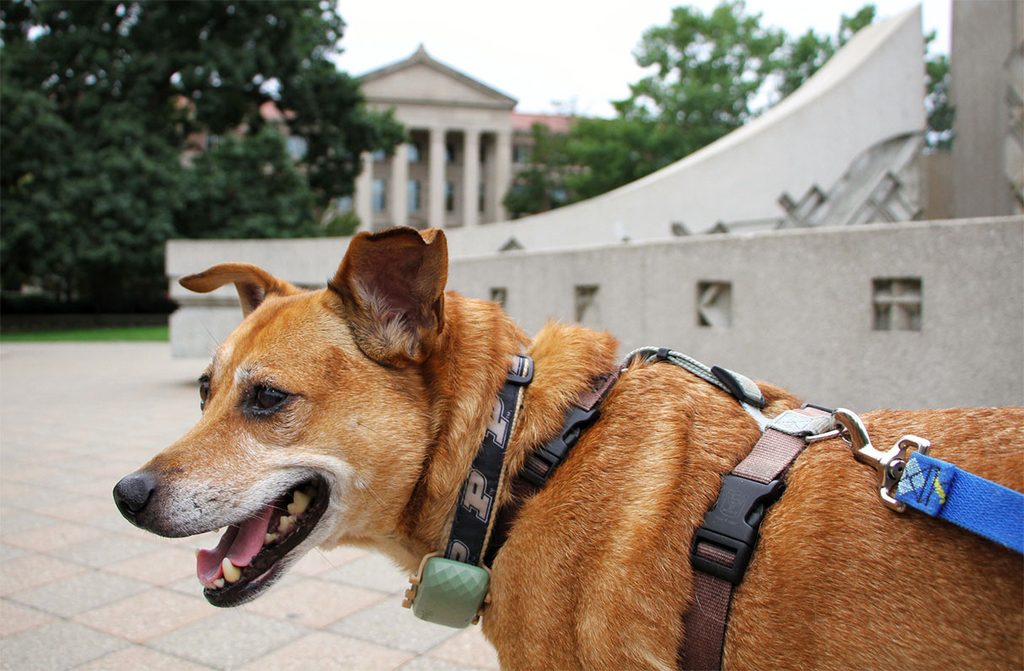
When Hank was diagnosed with colorectal cancer, his family turned to an experimental immunotherapy trial at Purdue, where veterinary research is exploring new approaches to a disease that affects both pets and people.
He’s a food thief.
A destroyer of toys.
An unapologetic bed hog.
He’s also, by all accounts, an exceptionally good boy. Even his medical records say so.
Hank, a nearly 12-year-old mixed-breed dog, is the self-appointed patriarch of the Shupe family and beloved companion of Zach Shupe, his wife, Carsen, and their two young sons, Brooks and Bennett.
Carsen adopted Hank from a rescue in St. Augustine, Florida, before she and Zach even started dating.
In June, Hank’s family learned that their beloved dog had colorectal cancer. By July, Hank was enrolled in an experimental cancer immunotherapy clinical trial at Purdue University, receiving a treatment that researchers hope could open new possibilities for dogs facing the disease.
A diagnosis, and a decision
Colorectal cancer develops in the lining of the colon or rectum, where tumors can obstruct the passage of stool. In Hank’s case, a colonoscopy revealed a tumor extending around nearly the entire circumference of his rectum, making surgical removal exceptionally difficult. Radiation carried significant risks, too.
The Shupes turned to Purdue’s veterinary oncology team, where they learned about an investigational immunotherapy being studied in dogs with naturally occurring cancers. They decided to enroll Hank.
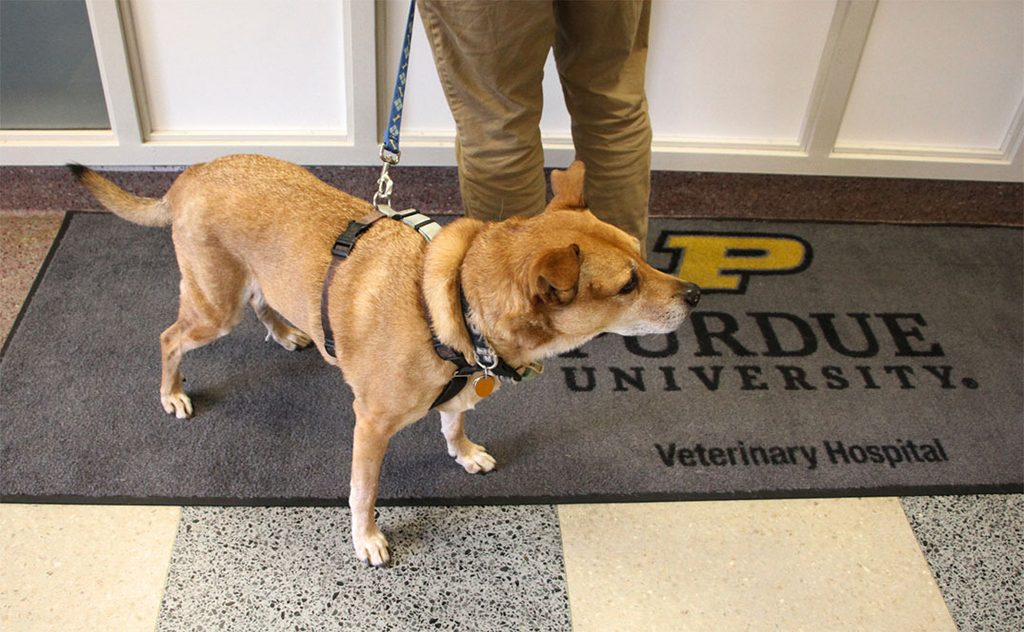
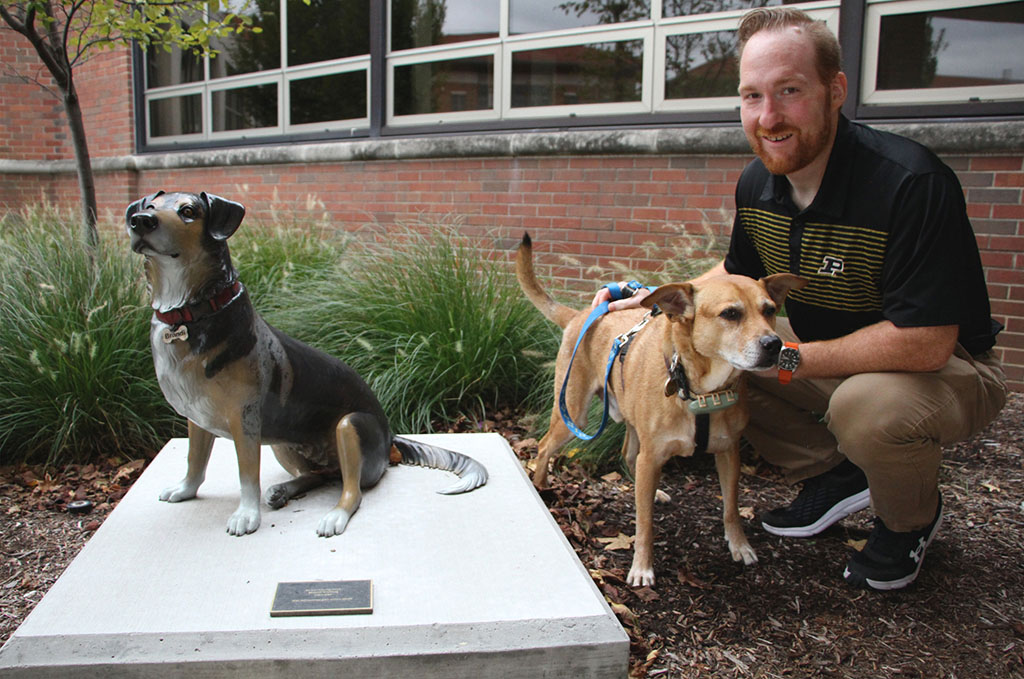
It’s not hard to see why they trusted Purdue with their furriest family member’s care. Zach and Carsen met while both were Purdue students, and Zach now works at the university. This is an Old Gold and Black family.
“We’re a Purdue family,” Zach said. “I know the standard of excellence that the College of Veterinary Medicine sets with their faculty and staff, the passion for learning that drives their research and Purdue’s longstanding leadership in comparative oncology.”
To know that Hank has this depth of resources and knowledge available to him, with an opportunity for his treatment to play even a small part in potential cancer treatment breakthroughs, is the best situation we could hope for when it comes to his care.
Zach shupe
Parent of Hank, Digital Content Strategist at Purdue
Teaching the immune system to fight back
Later in July, Hank began receiving an experimental cancer immunotherapy through a clinical trial at the Purdue University Veterinary Hospital.
Immunotherapy has transformed treatment for some human cancers in recent years. While chemotherapy and radiation work by damaging cancer cells, immunotherapy helps the body’s own immune system recognize and fight cancer. Cancer cells can evade or suppress the immune system, allowing tumors to grow despite the body’s natural defenses. Researchers are investigating ways to overcome those barriers.
The trial is led by Purdue Institute for Cancer Research (PICR) members Shawna Klahn and Nikolaos Dervisis, both associate professors of oncology in the Purdue University College of Veterinary Medicine. The study is evaluating the treatment’s safety and tolerability in dogs with naturally occurring solid tumors, while looking for early signs of anticancer activity.
In oncology, success can take different forms. For a cancer like Hank’s, a good outcome can mean what veterinarians call “stable disease,” in which the tumor’s growth slows or stops, helping him maintain his comfort and quality of life for as long as possible.
Whether the treatment will do that for Hank remains to be seen. Finding out whether experimental approaches can safely and effectively treat cancer is precisely why the clinical trial matters.
A connection across species
Dogs share our homes and much of our biology, and they develop cancers that can closely resemble those in humans. That’s the premise of comparative oncology: What we learn treating pet animals can help people, too.
Within Purdue’s ecosystem, that connection is particularly meaningful. The PICR is one of eight National Cancer Institute (NCI)-designated Basic Laboratory Cancer Centers in the nation. Its focus is on scientific discovery rather than patient care, and Purdue doesn’t operate a human hospital. But it does have a veterinary hospital, where cancer research and clinical care intersect, and where canine cancer patients like Hank can participate in studies exploring new approaches to treatment.
In Hank’s corner
For Zach and Carsen, the research is inseparable from the people caring for Hank. Hank’s veterinary team includes Zachary Yaufman, a post-doctoral research assistant, and Debbie Stevenson, a veterinary technician whose care made such an impression that the family nominated her for recognition through Purdue’s employee Thumbs Up program.
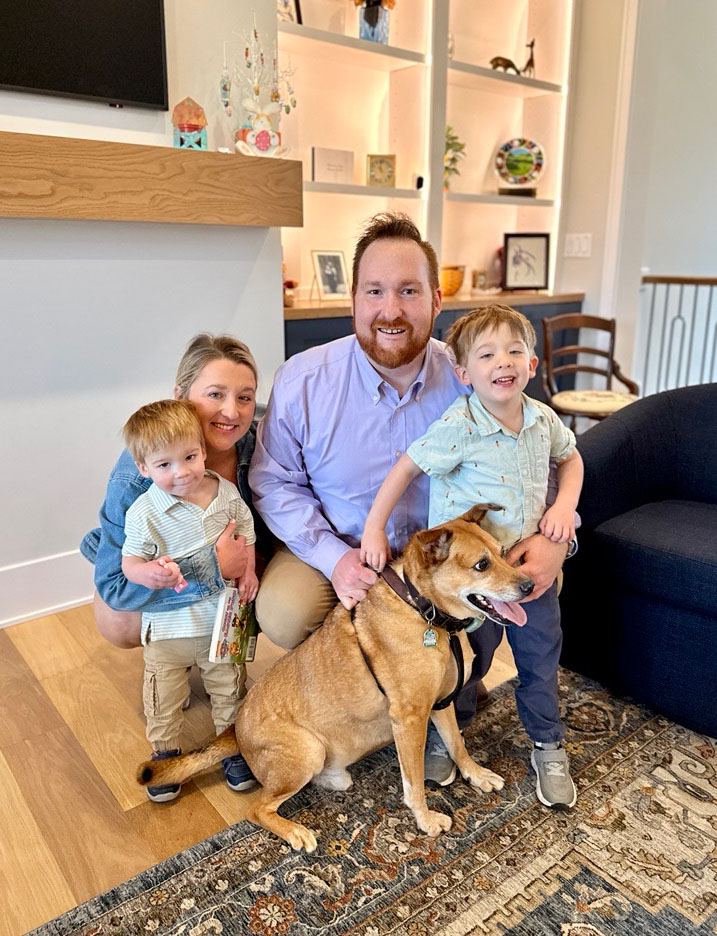
Although the experimental treatment comes without guarantees, Hank’s participation in the clinical trial offers another avenue of care in the face of a difficult diagnosis. The goal is giving Hank the care he needs and more of the life he loves. And through Hank’s participation in Purdue’s research, they’re helping scientists investigate an approach that could someday benefit other dogs facing cancer — with potential implications for people, too.
At home, Hank’s favorite routines remain familiar. He rides shotgun, burrows under the covers at night and follows Zach from room to room. He’s also the last one Brooks and Bennett say goodnight to and the first one they ask for in the morning.
Explore cancer research at purdue
- Canine cancer patients contribute to next-generation minimally invasive cancer therapies for dogs and humans
- PICR secures $9.4M in renewal of its NCI Cancer Center Support Grant, charting a course toward a half-century of discovery
- Lasers, Doppler effect personalize chemotherapy drug selection for cancer tumors