Seminar Series: Michael Wendt
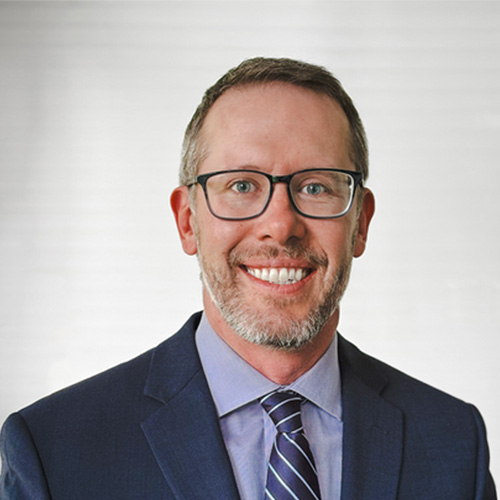
Michael Wendt
Head of the Department of Basic Medical Sciences
Purdue University
“Understanding Cellular Plasticity During Metastasis and Drug Resistance”
Cancer cells overcome the pressures of metastasis and drug treatment by selectively and actively altering their cell state, which allows them to better engage and overcome changes in the tumor microenvironment. Breast cancers in particular have an extraordinary ability to exit an epithelial state and transiently or permanently adopt properties of an alternate cell lineage. These changes can occur through several processes driven by substantial alterations in gene expression, leading to dynamic changes in cell morphology, proliferative potential, and metabolism. Together, they allow minimal residual disease to persist and ultimately give rise to full-blown, metastatic, drug-resistant lesions.
In this seminar, we will discuss the models and approaches our lab uses to understand the key transition steps of epithelial-mesenchymal transition (EMT) that enable drug resistance and metastasis. We collaborate extensively to model and pharmacologically target these transition states. We believe that inhibiting cell state transitions will reveal tumor cell vulnerabilities, leading to decreased metastasis and improved drug response.
Wendt lab
Wendt’s research program focuses on understanding and targeting metastatic breast cancer. Research in the Wendt lab is focused on understanding and targeting the molecular mechanisms necessary for cancer cells to exit the primary tumor environment, metastasize, and acquire resistance to currently used targeted molecular therapies.